Guinea’s Independence Day: 2 October 1958
On 28 September 1958, Guineans walked to polling stations across a territory larger than the United Kingdom and voted overwhelmingly to say “No” to France. Three days later, on 2 October 1958, Guinea became the first French African colony to gain independence, a moment that stunned Paris and inspired nationalist movements from Dakar to Dar es Salaam. For those of us who follow Guinea–Canada links, that date carries a double weight: it marks the birth of a nation, and it set the stage for a relationship with Canada that runs through bauxite, mining investment, and a diaspora that now calls Montreal, Toronto, and Ottawa home.
The Historic Vote: How Guinea Broke from France
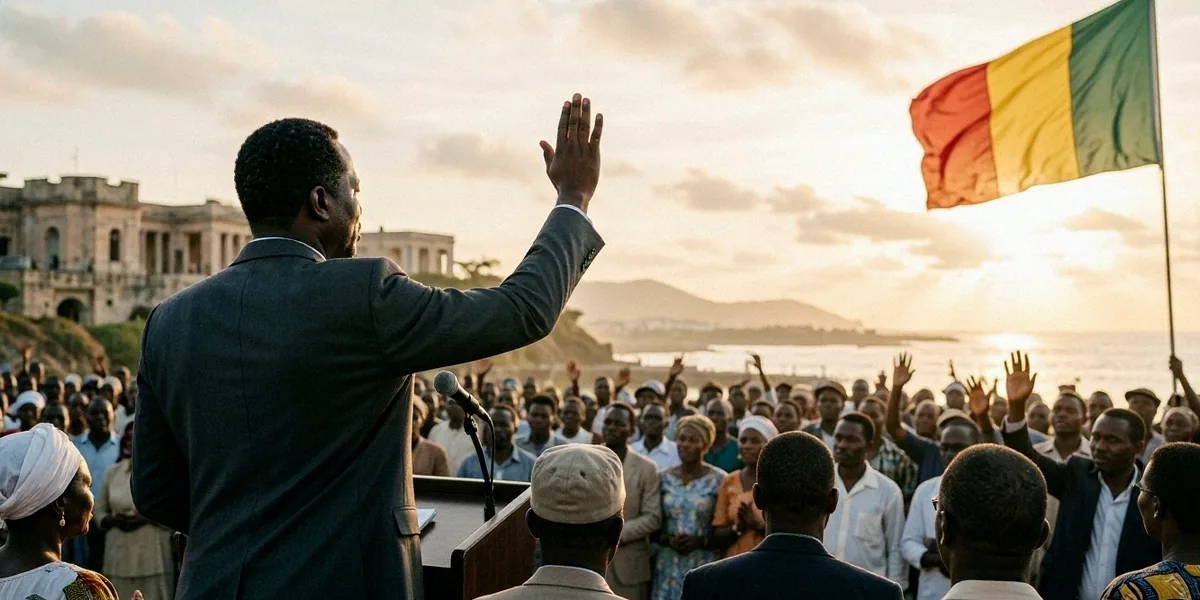
The 1958 referendum was Charles de Gaulle’s attempt to hold the French empire together. After returning to power in May 1958, de Gaulle drafted a new constitution and offered France’s overseas territories a stark choice: join the new French Community with limited autonomy, or vote “No” and take full independence, with all French aid cut immediately. Only one territory took the second option.
Charles de Gaulle’s Referendum and the ‘No’ Vote
Guinea’s rejection was decisive: roughly 95 percent of voters chose “No” on 28 September 1958. De Gaulle had reportedly warned that a “No” vote would mean an immediate break, and Paris kept its word. French administrators, teachers, doctors, and technicians were withdrawn within weeks. Files were destroyed, equipment was removed, and Guinea was left to build a state from almost nothing. The country’s Democratic Party of Guinea, led by Sékou Touré, had campaigned hard for independence, and the result made Guinea an outlier in Francophone Africa.
Sékou Touré’s Leadership and the Birth of a Nation
Sékou Touré, then a young trade unionist and mayor of Conakry, became Guinea’s first president. His most quoted line from the campaign remains the defining statement of that era: Guineans preferred “poverty in freedom to riches in slavery.” On 2 October 1958, independence was formally proclaimed, and Guinea began charting its own course. The early years were difficult, but the symbolic power of the moment was enormous. Ghana’s Kwame Nkrumah, a close ally of Touré, saw Guinea’s vote as proof that independence could be won outright rather than negotiated in stages.
Canada’s Role and Guinea–Canada Relations Today
Canada recognised Guinea’s independence in 1958 and has maintained diplomatic ties through decades of political change, including the transition to multiparty elections in the 1990s and the 2021 political transition. Today, the relationship is small in diplomatic terms but substantial in economic terms, driven overwhelmingly by mining.
Early Canadian Recognition and Diplomatic Ties
Canada was among the early Western countries to acknowledge Guinea’s sovereignty, and the two countries have exchanged ambassadors for decades. The Canadian embassy in Conakry handles consular services, development cooperation, and political reporting, while Guinea maintains an embassy in Ottawa. For Canadians travelling or working in Guinea, the Canadian embassy in Conakry is the first point of contact for passports, emergency assistance, and registration. We always recommend that Canadians register their travel with the embassy before departure, especially during major events like Independence Day.
Mining and Economic Partnerships
Canadian mining companies have been central to Guinea’s economy for more than half a century. Guinea holds some of the world’s largest bauxite reserves, and Canadian firms were early investors. Alcan, later part of Rio Tinto, developed the Boké region’s bauxite deposits and helped build the infrastructure that still moves ore to the coast. Rio Tinto’s involvement in the Simandou iron ore project has brought fresh attention to Guinea’s mining sector, and junior Canadian companies continue to explore for gold and other minerals. This makes Canada one of Guinea’s most important investment partners, even if trade volumes fluctuate with commodity prices.
- Bauxite: Guinea is the world’s second-largest producer, and Canadian-linked operations have shipped ore from Boké for decades.
- Iron ore: Rio Tinto’s Simandou project is one of the largest untapped iron ore deposits on the planet.
- Gold: Canadian junior miners hold exploration permits across the Siguiri and Mandiana regions.
Celebrating Independence Day in Guinea and Across the Diaspora
Independence Day in Guinea is a national holiday, and 2 October is marked with ceremonies, parades, and cultural programming across the country. For Guineans abroad, the date is a chance to reconnect with home, teach the next generation about 1958, and celebrate a national identity that has survived military rule, epidemics, and political transitions.
Festivities in Conakry
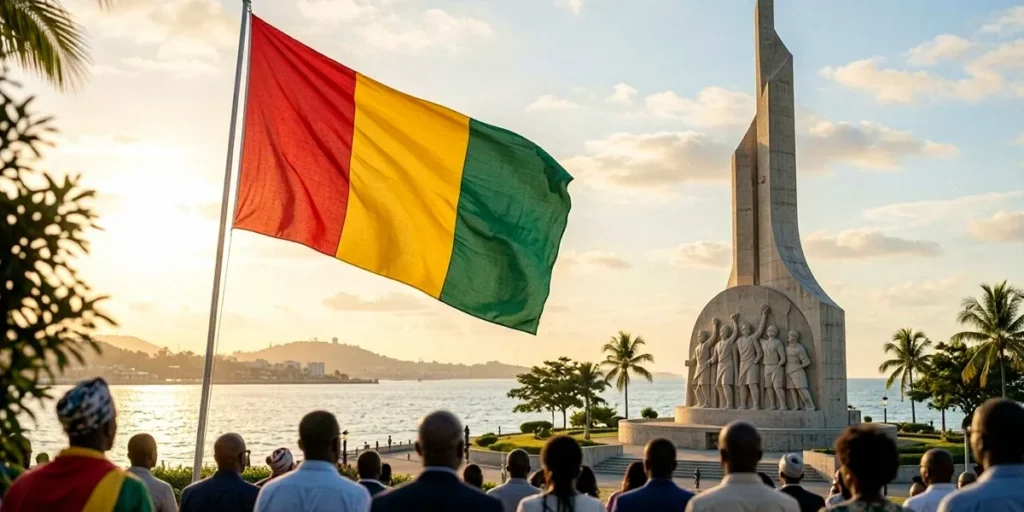
In Conakry, the day typically begins with a flag-raising ceremony and a military parade, often attended by the president and senior officials. The capital’s main avenues fill with marching bands, school groups, and representatives of the armed forces. Later in the day, cultural events take over: traditional music and dance performances, football matches, and speeches recalling the 1958 referendum. Markets and neighbourhoods in districts like Kaloum and Dixinn stay busy late into the evening.
Guinean Diaspora Celebrations in Canada
In Canada, the Guinean diaspora marks 2 October with gatherings in Montreal, Toronto, and Ottawa. Community associations organise dinners, concerts, and panel discussions on Guinean history and current affairs. Montreal has one of the largest Guinean communities in the country, and its Independence Day events often draw several hundred attendees. Toronto’s celebrations tend to be more informal, with family gatherings and cultural showcases, while Ottawa’s smaller community often links its events to broader African diaspora programming in the capital.
Travel and Visa Information for Canadians Visiting Guinea
If you are a Canadian citizen planning to visit Guinea for Independence Day or any other reason, the practical steps are straightforward but require planning. We recommend starting the visa process at least a month before departure, and checking the Canadian government’s travel advisories for Guinea before booking anything.
Visa Requirements for Canadian Citizens
Canadian citizens need a visa to enter Guinea. Options include applying through a Guinean embassy or consulate before travel, or using the e-visa portal that Guinea has operated in recent years. Requirements typically include a valid passport with at least six months’ validity, a yellow fever vaccination certificate, passport photos, and proof of accommodation. Visa rules can change, so confirm details with Guinea’s embassy in Ottawa or a consulate before you travel.
Flights and Getting to Conakry
There are no direct flights between Canada and Guinea. Most Canadians fly to Conakry via Casablanca with Royal Air Maroc, or via Paris with Air France. A typical routing is Toronto or Montreal to Casablanca, then a connecting flight to Conakry’s Ahmed Sékou Touré International Airport. Total travel time usually runs between 14 and 20 hours depending on layovers.
Health precautions matter. Malaria is present year-round, and the Canadian government recommends antimalarial medication, updated routine vaccinations, and a yellow fever certificate. Check the Canadian government travel advisories for Guinea for the latest on security, health, and regional restrictions before you leave.
The Diaspora’s Voice: Guineans in Canada Reflect
For Guinean-Canadians, 2 October is rarely just a date on a calendar. It is a link between two homes. We spoke with community members in Montreal and Toronto about what the day means to them.
“My parents left Guinea in the 1990s, but every 2 October we sat down and they told us about Sékou Touré and the ‘No’ vote,” says Fatoumata, a Montreal resident. “It is how I learned that Guinea chose independence when everyone else was afraid to.”
In Toronto, community organiser Mamadou describes Independence Day as a chance to pass on language and history. “Our kids grow up Canadian, and that is fine. But they should know where they come from. On 2 October we cook, we play music, and we tell the story.”
Both say the diaspora’s role is growing: more Guinean-Canadians are involved in community associations, cultural events, and even investment projects back home. For them, Independence Day is not nostalgia. It is a working reminder of what Guinea can be.
Guinea’s Independence Day marks a rare moment in African history: a colony that chose full sovereignty when a softer option was on the table. For Guineans in Canada, 2 October 1958 is both a national anniversary and a personal one, tied to family stories, community events, and an ongoing connection between Conakry and Canadian cities. We encourage readers to join a diaspora event in Montreal, Toronto, or Ottawa this year, or to start planning a visit to Guinea and see the celebrations in person.
FAQ
When is Guinea’s Independence Day?
Guinea’s Independence Day is 2 October, marking the date in 1958 when the country formally became independent from France after voting “No” in Charles de Gaulle’s referendum.
Do Canadian citizens need a visa to visit Guinea?
Yes. Canadian citizens require a visa to enter Guinea. You can apply through Guinea’s embassy in Ottawa or a consulate, or use Guinea’s e-visa portal where available. Confirm current requirements before booking travel.
Are there direct flights from Canada to Conakry?
No. Canadians typically fly to Conakry via Casablanca with Royal Air Maroc or via Paris with Air France. Total travel time is usually 14 to 20 hours.
How does the Guinean diaspora in Canada celebrate Independence Day?
Guinean-Canadians in Montreal, Toronto, and Ottawa mark 2 October with community dinners, concerts, cultural performances, and panel discussions on Guinean history and current affairs.
What should Canadians check before travelling to Guinea?
Check the Canadian government travel advisories for Guinea, ensure your passport is valid for at least six months, get a yellow fever vaccination, and arrange antimalarial medication before departure.