
AmbaGuinee-Canada.org – Independent Guide to Guinea–Canada Links
We still remember the first time we tried to help a cousin in Conakry figure out whether she needed a transit visa for a flight through Paris to reach us in Montreal. We spent three hours bouncing between official government portals, half-translated forum threads from 2014, and a Facebook group where two strangers were arguing about whether a biometric appointment in Dakar was mandatory. Somewhere in that chaos, we realized something simple: there was no single, independent, trustworthy place to turn for information about the links between Guinea and Canada. Everything was either outdated, sponsored by an immigration consultancy, or buried under layers of bureaucratic jargon. That experience is why AmbaGuinee-Canada.org exists. We are an independent information blog built for Guineans in Canada, Canadians curious about Guinea, travellers, students, families, and anyone trying to make sense of the deep and growing connections between these two countries. No hidden agendas, no paid placements — just clear, researched, first-person guidance on the things that actually matter.
Guinea–Canada Relations: A Deep Dive
The relationship between Guinea and Canada is older, richer, and more complicated than most people realize. It is not just about mining contracts or development aid, although those are important pieces of the puzzle. It is also about students who came to study in Quebec and stayed, about Canadian engineers who spent years in the Boké region, about cultural exchanges that rarely make headlines, and about a shared language — French — that makes conversation between Conakry and Montreal feel natural. When we dig into the archives and talk to people who have lived these connections, we find a relationship that has quietly shaped both countries in ways that deserve far more attention than they usually get.
Historical Diplomatic Ties
Canada and Guinea established formal diplomatic relations in the early 1960s, shortly after Guinea’s independence from France in 1958. From the beginning, the relationship was shaped by Canada’s interest in supporting newly independent African states and Guinea’s openness to partners beyond its former colonial power. Over the decades, Canada maintained a presence in Conakry through various channels, and Guinea became one of the West African countries where Canadian development assistance had a visible footprint. The Canadian International Development Agency, widely known as CIDA, was for many years the main vehicle for this cooperation. CIDA funded projects in health, education, rural development, and governance, and its legacy can still be seen in training programs, infrastructure, and institutional partnerships that outlasted the agency itself (CIDA was folded into what is now Global Affairs Canada in 2013). For many Guineans of a certain generation, “the Canadians” were the people who built a clinic, funded a teacher-training college, or supported a women’s cooperative — and that memory still carries goodwill.
Diplomatically, the two countries have generally enjoyed cordial and constructive relations. Canada has consistently supported Guinea’s democratic transition efforts, particularly after the 2008 coup and during the long path toward civilian rule. Canadian diplomats based in Dakar, Abidjan, or Accra have often covered Guinea as part of their regional responsibilities, and Guinea has maintained an embassy in Ottawa at various points in its history. High-level visits have occurred periodically, and both countries have collaborated in multilateral forums, including within La Francophonie, where the shared French language gives them a natural platform for cooperation. We think this diplomatic history matters because it explains why so many doors remain open today — for students, for businesspeople, and for families navigating immigration pathways.
Trade and Investment: Mining and Beyond
If diplomacy is the quiet backbone of the Guinea–Canada relationship, mining is its loud, visible, and sometimes controversial heart. Guinea sits atop some of the world’s most significant bauxite reserves and, crucially, the Simandou iron ore deposit — one of the largest untapped high-grade iron ore resources on the planet. Canadian mining companies and investors have been involved in Guinea’s extractive sector for decades, and the country’s mineral wealth has attracted sustained Canadian interest. Rio Tinto’s Simandou project is the most prominent example: a massive, multi-billion-dollar undertaking that has drawn global attention and, at times, scrutiny over its environmental, social, and governance dimensions. The Simandou story is complex — involving multiple partners, shifting ownership structures, infrastructure requirements including a long railway to the coast, and intense debate about whether local communities will genuinely benefit. We follow it closely because its outcome will shape Guinea’s economy for a generation.
Beyond mining, trade between Canada and Guinea remains modest but has room to grow. Canadian exports to Guinea include machinery, vehicles, food products, and specialized equipment, while Guinean exports to Canada are limited, dominated by agricultural and artisanal goods. There are opportunities in agri-food processing, renewable energy, education services, and technology — sectors where Canadian expertise and Guinean demand could align. We have spoken with entrepreneurs on both sides who see untapped potential, particularly in the diaspora, where Guinean-Canadians act as natural bridges for trade and investment. Canadian companies operating in Guinea have also faced questions about labour practices, community consultation, and environmental standards, and we believe these conversations are healthy and necessary. A relationship built only on extraction is not sustainable; a relationship built on mutual benefit, transparency, and local capacity is.
Cultural and Educational Exchanges
Perhaps the most human side of the Guinea–Canada relationship is education. Thousands of Guinean students have studied at Canadian universities and colleges over the years, particularly in Quebec, where French-language institutions make the transition easier. Many of them stayed, built careers, raised families, and became part of the Guinean diaspora in Montreal and Toronto. Others returned to Guinea with Canadian degrees and became leaders in medicine, engineering, public administration, and business. Scholarship programs, university partnerships, and research collaborations have created durable links between institutions in both countries. We regularly hear from students asking about study permits, tuition costs, and credential recognition, and we cover these topics because they are the lived reality of the relationship.
Culturally, the exchanges are vibrant but underreported. Guinean musicians, writers, and artists have performed and exhibited in Canada, and Canadian cultural organizations have occasionally partnered with Guinean institutions. Food is another bridge — Guinean restaurants and caterers in Montreal have introduced dishes like riz gras, sauce feuille, and grilled fish to a wider audience. Sports, particularly football, generate passionate conversations between fans in Conakry and their cousins in Canada. We believe these cultural threads deserve as much attention as the mining headlines, because they are what make the relationship feel real to ordinary people. When a Guinean-Canadian family gathers in Montreal to celebrate a wedding with traditional music and Canadian guests dancing along, that is diplomacy too — the kind that happens in living rooms and community halls.
Travel to Conakry: Practical Guide for Canadians
Travelling to Conakry from Canada is an adventure that rewards preparation. We have made the journey ourselves and helped dozens of readers plan theirs, and the single biggest lesson is this: do not assume that what works for a trip to Europe will work for Guinea. The visa process is different, the flight options are limited, the health precautions are serious, and the rewards — the Atlantic coastline, the markets, the music, the warmth of the people — are absolutely worth it. This section is our practical, no-nonsense guide for Canadian citizens planning a trip to Guinea’s capital.
Visa Information for Canadian Citizens
Canadian citizens need a visa to enter Guinea. The good news is that Guinea has made progress in simplifying the process through an e-visa system, which allows travellers to apply online before departure. The e-visa is typically valid for short stays and can be extended once in the country. However, we always advise readers to verify the current requirements directly with the Guinean embassy or consulate responsible for Canada — usually the embassy in Ottawa or the consulate with regional jurisdiction — because policies can change with little notice. You will need a passport valid for at least six months beyond your planned arrival, a recent photograph, proof of accommodation, a return or onward ticket, and evidence of yellow fever vaccination, which is mandatory for entry into Guinea. The yellow fever certificate is not optional; carry it with you, because it may be checked at the airport in Conakry.
For longer stays, business travel, or work, the visa categories and requirements differ, and you should budget more time for processing. We recommend applying at least three to four weeks before your planned departure, even for the e-visa, to leave room for delays. Payment is usually made online by credit card, and you should print multiple copies of your approval and carry them with your travel documents. If you are travelling with children, ensure each family member has their own visa and vaccination documentation. We have heard from readers who were turned away at check-in in Montreal or Toronto because their e-visa approval had not arrived or their yellow fever certificate was missing — do not let that be you.
Flights and Airlines: Routes from Toronto and Montreal
There are no direct flights between Canada and Guinea, so every journey involves at least one connection, usually in Europe or West Africa. From Montreal, the most common routings are through Paris (Air France), Brussels (Brussels Airlines), or Casablanca (Royal Air Maroc). From Toronto, similar options exist, with connections through Europe or the United States. Air Canada does not currently operate direct flights to Conakry, but Air Canada codeshare and partner arrangements can sometimes be used for the North American leg of a longer itinerary, and we regularly check whether new routings have emerged. Royal Air Maroc is a popular choice for travellers from Montreal and Toronto because it offers competitive fares and a manageable connection through Casablanca, though layover times can be long.
Flight prices fluctuate significantly depending on the season, with the highest fares typically around December, the summer months, and major holidays. Booking two to three months in advance usually yields the best balance of price and flexibility. We recommend checking baggage allowances carefully, because some carriers on the African leg have stricter limits than the transatlantic carriers, and overweight fees can be steep. If you are travelling with family, consider an overnight connection in Casablanca or Paris to break up the journey, especially with young children. And always build in a buffer day after arrival — jet lag plus the heat and humidity of Conakry is a real combination, and you will want time to settle before any meetings or family obligations.
Health and Safety Tips for Conakry
Health preparation is not optional when travelling to Guinea. Beyond the mandatory yellow fever vaccination, we strongly recommend consulting a travel medicine clinic in Canada at least six weeks before departure to discuss malaria prophylaxis, typhoid, hepatitis A and B, and routine vaccinations. Malaria is present year-round in Guinea, including in Conakry, and it is a serious risk — use antimalarial medication as prescribed and sleep under a mosquito net where possible. Bring a well-stocked medical kit, including oral rehydration salts, insect repellent with DEET, sunscreen, and any prescription medications in their original packaging with a copy of your prescription. Tap water is not safe to drink; stick to bottled or filtered water, and be cautious with raw vegetables and street food until your stomach has adjusted.
On safety, Conakry is generally a welcoming city, but like any large capital it has areas where caution is warranted. Avoid displaying expensive jewellery or electronics, keep a low profile, and use reputable transportation — either a trusted taxi arranged by your hotel or a ride-hailing app where available. Traffic is heavy and driving standards vary, so we advise against self-driving unless you are experienced with local conditions. Political demonstrations can occur, particularly around election periods, and it is wise to avoid large crowds and monitor local news. Register your trip with Global Affairs Canada’s registration service, keep digital and paper copies of your passport and visa, and save the contact details of the Canadian embassy responsible for Guinea (often based in Dakar) as well as local emergency numbers. Petty crime, including pickpocketing in crowded markets, is the most common issue, and basic awareness goes a long way.
Top Attractions in Conakry
Conakry is a city of contrasts, and we love it for that. Here are the spots we consider essential for any first-time visitor:
- Îles de Los: A short boat ride from the city, these islands offer beaches, quiet villages, and a welcome escape from the capital’s bustle. Île de Roume, Île de Tamara, and Île de Kassa each have their own character, and a day trip here is one of the highlights of any visit.
- Marché Madina: The largest market in Conakry and a sensory overload in the best way — fabrics, spices, produce, electronics, and everything in between. Go with a local guide, keep your valuables secure, and bargain with good humour.
- Grande Mosquée de Conakry: A striking architectural landmark and an important spiritual centre, worth visiting respectfully outside prayer times.
- Musée National de Sandervalia: Home to artefacts, masks, musical instruments, and exhibits on Guinea’s ethnic groups and history — a compact but worthwhile introduction to the country’s cultural depth.
- Corniche and the coast: The seaside road offers views, fresh seafood restaurants, and a sense of the city’s relationship with the Atlantic.
- Jardin 2 Octobre: A green space in the city centre, useful for a shaded walk and a sense of local daily life.
Beyond these, we encourage visitors to spend time in neighbourhoods like Kaloum, Ratoma, and Matam, eat at local maquis, listen to live music, and talk to people. Conakry’s greatest attraction is its people, and the conversations you have will stay with you longer than any monument.
Visa Information: Navigating Guinea and Canada
Visa questions are the single most common reason readers contact us, and we understand why — the processes are different in each direction, the requirements can change, and misinformation circulates widely. This section breaks down the two main pathways: Guineans applying to visit, study, or live in Canada, and Canadians applying to visit Guinea. We are not immigration lawyers, and we always recommend confirming details with official sources, but we can help you understand the landscape and avoid the most common mistakes.
Canadian Visa Applications for Guineans
Guineans who wish to visit Canada must apply for a temporary resident visa (visitor visa), a study permit, or a work permit, depending on their purpose. The application is submitted online through the Government of Canada’s immigration portal, and the process includes completing forms, paying fees, providing supporting documents, and — critically — giving biometrics (fingerprints and a photograph) at a Visa Application Centre (VAC). There is no VAC in Guinea itself, which means applicants typically travel to Dakar, Senegal, or another regional VAC to provide biometrics. This is a significant logistical and financial hurdle, and we cover it in detail because it catches many applicants off guard. Biometrics are valid for ten years, so once completed, future applications may not require a repeat visit.
Processing times vary widely depending on the visa category, the volume of applications, and the completeness of the file. Visitor visa applications from Guinea often take several weeks to several months, and study permit applications can take longer, especially around peak intake periods in September and January. Applicants should apply as early as possible and ensure their documents are consistent, translated where required, and supported by evidence of ties to Guinea (for visitors), proof of funds, and a clear purpose of travel. We have seen strong applications refused because of minor inconsistencies — a mismatched date, an unexplained bank deposit, a missing employment letter — so attention to detail matters enormously.
Guinean Visa for Canadians: Step-by-Step
For Canadian citizens travelling to Guinea, the process is generally more straightforward, especially with the e-visa system. Here is the step-by-step approach we recommend:
- Check current requirements: Visit the official Guinean government e-visa portal and the Guinean embassy website for Canada to confirm the latest rules, fees, and processing times. Policies change, so verify before you pay.
- Gather your documents: Valid passport (six months beyond travel), recent photo, flight itinerary, proof of accommodation, yellow fever vaccination certificate, and any invitation letter if visiting family or business contacts.
- Complete the online application: Fill in the e-visa form accurately, upload the required documents, and pay the fee by credit card. Save your application number and payment receipt.
- Wait for approval: Processing usually takes a few business days but can take longer during busy periods. Do not book non-refundable flights until your visa is approved.
- Print and carry your approval: Bring multiple printed copies of your e-visa approval and all supporting documents. You will present them at check-in and on arrival in Conakry.
- Arrive and complete formalities: On arrival, present your passport, visa approval, and yellow fever certificate. Keep copies of everything in case of questions.
If you are staying longer than the e-visa allows, plan to extend your visa at the relevant office in Conakry before your authorized stay expires. Overstaying can result in fines and future entry difficulties.
Common Pitfalls and Tips
We have compiled the mistakes we see most often, and we hope sharing them saves you time and stress:
- Missing or expired yellow fever certificate: This is mandatory for entry to Guinea and is checked. Get vaccinated at least ten days before travel and carry the original certificate.
- Applying too late: Both Canadian and Guinean visa processes can take longer than expected. Apply early, especially for study permits and family visits.
- Inconsistent documents: Names, dates, and financial information must match across all forms. Discrepancies trigger refusals and delays.
- Ignoring the biometrics requirement: Guinean applicants to Canada must plan travel to a VAC, usually in Dakar. Budget time and money for this step.
- Relying on unofficial advice: Facebook groups and forums can be helpful for community support but are not authoritative. Always confirm with official sources.
- Not keeping copies: Keep digital and paper copies of every document, approval, and receipt. You may need them at multiple points.
- Booking non-refundable travel before approval: Wait for visa approval before committing to expensive, non-changeable bookings.
If your application is refused, do not panic. Read the refusal letter carefully, understand the stated reasons, and consider reapplying with stronger evidence or seeking professional advice. We cover refusal stories and successful reapplications regularly because they are part of the real experience of navigating these systems.
Guinean Diaspora in Canada: Stories and Support
The Guinean diaspora in Canada is small compared to some other African communities, but it is vibrant, growing, and increasingly visible. We have spent time with community members in Montreal and Toronto, attended events, and heard stories that range from triumphant to heartbreaking. What stands out is the resilience — the way families support each other, the way associations mobilize for emergencies, and the way a new generation of Guinean-Canadians is blending two cultures with confidence. This section is about them.
Major Diaspora Hubs: Montreal and Toronto
Montreal is the heart of the Guinean diaspora in Canada. The city’s French-language environment, its universities, and its established immigrant communities make it a natural destination for Guineans, and neighbourhoods in the north and east of the city have become hubs of Guinean life. You will find Guinean restaurants, shops, mosques, and community associations, and on weekends the sounds of Guinean music and the smells of traditional cooking fill community halls and apartment buildings. Toronto has a smaller but growing Guinean population, with a more dispersed geography but active community networks, particularly in Scarborough, North York, and Etobicoke. Other cities — Ottawa, Calgary, Edmonton, Quebec City — have smaller communities, often connected to Montreal and Toronto through family and professional networks.
These hubs matter because they are where new arrivals find their first apartment, their first job lead, their first friend. They are also where culture is transmitted to the next generation — through language classes, dance troupes, religious gatherings, and the simple fact of children growing up hearing Guinean languages alongside French and English. We regularly feature profiles of businesses and community leaders in these cities because they are the infrastructure of diaspora life.
Community Organizations and Events
The Association Guinéenne du Canada is one of the most established community organizations, providing a formal structure for advocacy, cultural events, and mutual aid. It has been involved in welcoming new arrivals, organizing cultural celebrations, and representing the community’s interests to Canadian institutions. Beyond this association, there are numerous smaller groups — student associations at universities, women’s groups, sports clubs, religious congregations, and informal savings circles (tontines) that function as financial safety nets. These organizations often operate with limited resources but enormous dedication, and they are the first line of support for many families.
Events are a major part of diaspora life. Independence Day celebrations on October 2nd, Eid gatherings, cultural festivals, concerts, and fundraising events for community members in need bring people together across generations. We try to list major events on our site and encourage readers to share their own. We have attended weddings, naming ceremonies, and community fundraisers, and we can attest to the warmth and generosity that define these gatherings. If you are new to Canada, connecting with a community organization is one of the fastest ways to feel at home.
Success Stories and Challenges
We could fill a book with success stories. There are Guinean-Canadian doctors, engineers, teachers, entrepreneurs, and public servants who have built remarkable careers while staying connected to their roots. There are families who arrived with almost nothing and now own homes, send their children to university, and support relatives back in Guinea. There are artists and musicians who have found audiences in Canada while keeping Guinean traditions alive. These stories deserve to be told, and we tell them because they counter the narrow narratives that often dominate discussions of immigration.
But we would be dishonest if we did not also acknowledge the challenges. Many Guinean-Canadians face barriers in credential recognition, particularly in regulated professions like medicine and engineering. Language can be a hurdle, even for French speakers navigating Quebec’s particular linguistic landscape or English-speaking Canada. Racism and discrimination exist, and they affect employment, housing, and everyday life. Family separation is a constant emotional weight, especially when immigration processes drag on for years. Mental health support is often underused due to stigma and lack of culturally appropriate services. We believe in naming these challenges clearly, because only then can we advocate for change and support each other effectively.
Our Editorial Approach: Why Trust Us?
There are many websites about Guinea and about immigration to Canada. Some are excellent, some are outdated, and some are essentially advertisements dressed up as information. We started AmbaGuinee-Canada.org because we wanted something different: an independent, first-person resource written by people who have actually navigated these systems and who have no financial stake in the advice they give. This section explains how we work and why we think that matters.
Our Team and Mission
Our team is made up of writers, researchers, and community members with direct experience of Guinea–Canada links. Some of us were born in Guinea and now live in Canada; others are Canadians who have lived and worked in Guinea; all of us are committed to accuracy, fairness, and usefulness. We are not affiliated with any political party, mining company, immigration consultancy, or government agency. Our mission is simple: to provide reliable, independent information that helps people make informed decisions about travel, immigration, business, and community life between Guinea and Canada. We fund the site through modest advertising and reader support, and we disclose any potential conflicts clearly.
How We Research and Report
Every article we publish goes through a research and verification process. We prioritize primary sources — official government websites, embassy communications, legal texts, and direct interviews — over secondhand summaries. When we cite a fact, we try to link to the source so readers can verify it themselves. When information is uncertain or changing, we say so. We update articles when policies change, and we date our content so readers know how current it is. We also rely on our community: readers regularly send us corrections, updates, and personal experiences, and we take these seriously. If we get something wrong, we correct it promptly and transparently.
Feedback and Community Engagement
We do not see our readers as an audience; we see them as collaborators. Many of our best articles began with a reader’s question or a story someone shared. We welcome feedback, corrections, story tips, and guest contributions. We also try to respond to comments and emails, though we ask for patience during busy periods. Our community engagement extends to social media, where we share updates and facilitate discussions, and to occasional in-person events in Montreal and Toronto. If you have a story to tell, a question to ask, or a correction to offer, we want to hear from you.
Frequently Asked Questions (FAQ)
Do Canadians need a visa to visit Guinea?
Yes. Canadian citizens need a visa to enter Guinea. The most common route is the online e-visa, which you apply for before departure. You will also need a passport valid for at least six months, proof of accommodation, a return ticket, and a yellow fever vaccination certificate, which is mandatory. Always verify current requirements with the Guinean embassy or official e-visa portal before travelling, as policies can change.
How do Guineans apply for a Canadian visitor visa?
Guineans apply online through the Government of Canada’s immigration portal. The process involves completing forms, paying fees, submitting supporting documents, and providing biometrics at a Visa Application Centre — the nearest one for most Guineans is in Dakar, Senegal. Processing times vary, so apply well in advance and ensure all documents are consistent and complete. We recommend confirming details on the official IRCC website.
Are there direct flights from Canada to Conakry?
No, there are currently no direct flights between Canada and Guinea. Travellers from Montreal and Toronto typically connect through Paris, Brussels, Casablanca, or other European or West African hubs. Air Canada does not operate direct flights to Conakry, though partner arrangements may be available for part of the journey. Royal Air Maroc via Casablanca is a popular option for many travellers.
Is Guinea safe for Canadian travellers?
Guinea is generally welcoming to visitors, but like any country it requires common-sense precautions. Avoid displaying valuables, use reputable transportation, monitor local news for political developments, and register your trip with Global Affairs Canada. Health precautions — especially malaria prophylaxis and the yellow fever vaccine — are essential. Check your government’s current travel advisories before departure.
How can I connect with the Guinean community in Canada?
Start with established organizations like the Association Guinéenne du Canada, which organizes events and provides support. Community hubs in Montreal and Toronto include restaurants, mosques, cultural associations, and student groups. Attending cultural events, religious gatherings, and community fundraisers is a great way to meet people. Our site regularly features community news and event listings, and we welcome readers to share their own connections.
We built AmbaGuinee-Canada.org because we believe that the links between Guinea and Canada — family, business, culture, education, and friendship — deserve a reliable, independent home online. Whether you are planning your first trip to Conakry, navigating a visa application, settling into life in Montreal, or simply curious about a country and a relationship that rarely get the attention they deserve, we are here to help. Our team is dedicated to being that trustworthy resource, and we invite you to engage with us: send us your questions, share your stories, correct our mistakes, and tell us what you need to know. The Guinea–Canada connection is built one conversation at a time, and we are glad you are part of this one.
Latest articles
- Travelling from Canada to Guinea: Entry Basics
 Travelling from Canada to Guinea: Entry Basics for 2025 When our team first started planning a trip from Montreal to Conakry, we
- The Guinean Community in Canada
 The Guinean Community in Canada: A Growing Diaspora When we first started tracking Guinea–Canada links for this blog, finding reliable information about
- Studying in Canada as a Guinean Student
 Studying in Canada as a Guinean Student: What Our Team Wishes You Knew Picture the scene: a student in Conakry, acceptance letter
- Sending Money Home: Options Compared
 Sending Money Home: Options Compared for Guinea–Canada Transfers You finish work on a Friday, open your banking app, and start the transfer
- How Embassies and Consulates Differ
 How Embassies and Consulates Differ: A Practical Guide for Guinea–Canada Links Picture this: a Guinean student in Montreal opens her bag and
- Guinean Cuisine: Dishes to Try
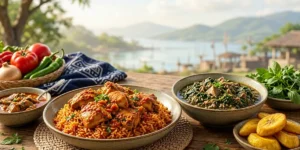 Guinean Cuisine: Dishes to Try and Where to Find Them in Canada Close your eyes and picture it: a bowl of riz