
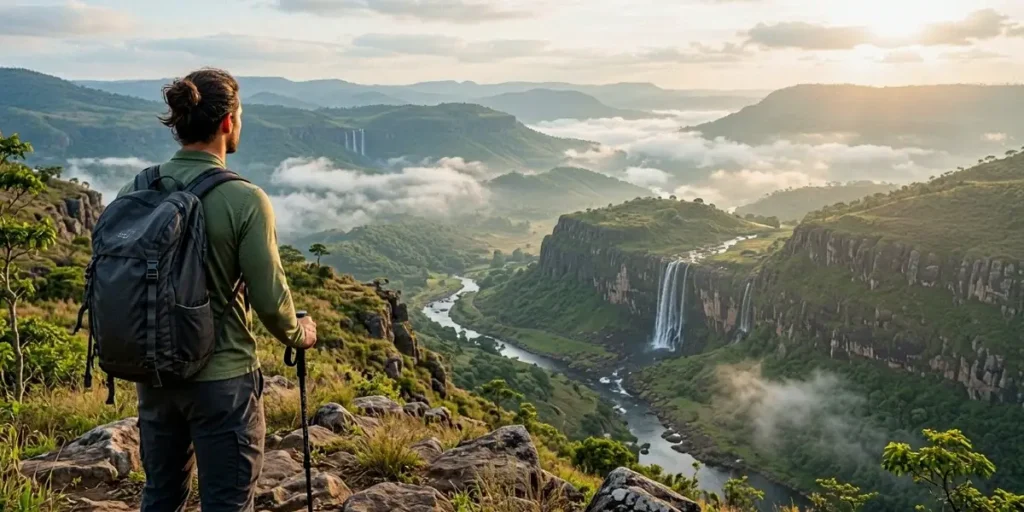
Fouta Djallon: Highlands and Hiking in Guinea’s Fouta Djallon
Mist rolls across the plateau at dawn, spilling over sandstone cliffs and settling into green valleys where Fulani herders move their cattle along ancient paths. This is the Fouta Djallon, Guinea’s highland heartland, and for Canadian hikers tired of the same Rocky Mountain trails, it offers something genuinely different: 1,500-metre peaks, thundering waterfalls, and villages where Pular is spoken more often than French. We’ve put together this guide for Canadians — whether you’re a diaspora traveller returning to family roots or a first-time visitor curious about West Africa’s most underrated trekking region.
Why Fouta Djallon Should Be on Your Guinea Itinerary
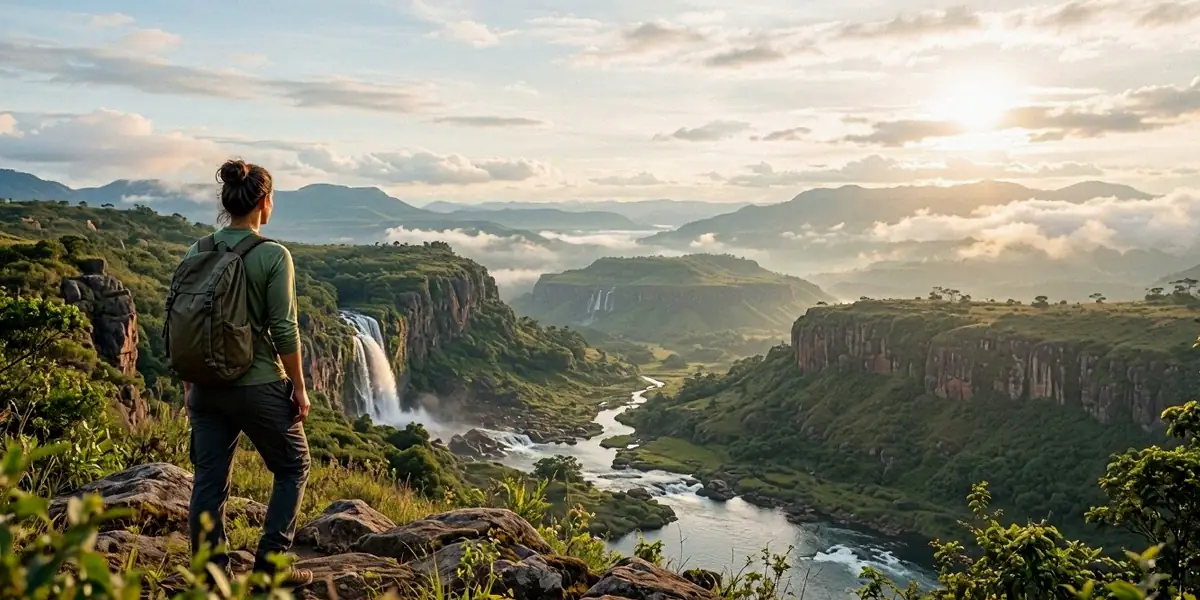
The Fouta Djallon covers roughly 80,000 square kilometres of central Guinea, a maze of sandstone plateaus, deep gorges, and rolling grassland that sits at 800 to 1,500 metres above sea level. Its main towns — Labé, Dalaba, Pita, and Mamou — are connected by roads that wind through some of the most photogenic scenery in West Africa. For Canadians used to long drives between trailheads, the distances here are modest, but the terrain is dramatic.
The Water Tower of West Africa
The region earns its nickname honestly. The Gambia, Senegal, and Bafing rivers all rise in the Fouta Djallon, along with dozens of smaller tributaries that feed the Niger basin. That abundance of water explains the waterfalls, the lush valleys, and the terraced market gardens that supply much of Guinea’s produce. Hikers cross streams on log bridges, walk past irrigation channels cut into the rock, and occasionally share a trail with women carrying basins of cassava back from the fields.
A Climate Respite from Conakry
Conakry is hot and humid year-round, with temperatures that regularly push past 30°C. The Fouta Djallon is a different world. At Dalaba, situated around 1,200 metres, evenings can drop to 15°C or lower between December and February. We recommend packing a fleece even if you’re arriving from the coast in shorts. The cool air is one of the main reasons Guineans themselves head to the highlands for holidays.
Cultural Heart of the Fulani People
The Fouta Djallon is the historic homeland of the Fulani (Peul) people, and their influence shapes everything from architecture to cuisine. You’ll see it in the round thatched huts of rural villages, in the leatherwork and woven mats sold in Labé’s market, and in the formal courtesy with which strangers are greeted. Learning a few words of Pular — jam waali for good morning, no mbaɗɗaa for how are you — goes a long way.
Getting There: From Conakry to the Highlands
Reaching the Fouta Djallon from Conakry takes planning. The road distance to Labé is roughly 450 kilometres, but poor surfaces and heavy truck traffic mean the journey can take 10 to 14 hours. Most travellers break it into two days, overnighting in Kindia or Mamou.
By Road: Conakry to Labé and Dalaba
Shared taxis and minibuses leave Conakry’s Madina and Bambeto stations early in the morning. Fares are affordable by Canadian standards, but comfort is minimal and luggage space is limited. If your budget allows, hiring a private 4×4 with a driver for the round trip gives you far more flexibility and is the option we usually suggest for groups of two or more. The stretch between Mamou and Dalaba is paved and scenic; beyond Dalaba toward Labé, expect potholes and occasional washouts during the rainy season.
By Air: Domestic Flights to Labé
Guinea’s domestic aviation sector is small and schedules change frequently. When flights operate, the hop from Conakry to Labé takes under two hours and saves a full day of driving. Confirm your booking directly with the airline a few days before departure, and have a road backup plan in case the flight is cancelled — it happens.
Visa and Entry Tips for Canadians
Canadian passport holders need a visa for Guinea, available at the embassy or on arrival. The e-visa portal has simplified the process considerably, but we still recommend applying at least two weeks ahead and carrying a printed approval letter. Bring your yellow fever vaccination certificate — it’s checked at the airport. Once you’re in the country, carry a photocopy of your passport and visa; police checkpoints outside the capital are common.
Top Hiking Trails and Natural Attractions
The Fouta Djallon’s trails range from easy half-day walks to full-day scrambles. Local guides are available in Pita, Dalaba, and Labé, and we strongly recommend hiring one — not only for navigation but because guides open doors to villages and family-run eateries you’d otherwise miss.
Mount Loura: The Roof of Guinea
Mount Loura is the highest point in Guinea at 1,538 metres, sitting near the town of Mali in the northern Fouta. The climb is moderate, taking three to four hours round trip, with rocky sections near the summit that require steady footing. On clear mornings you can see across the plateau into Senegal. Start early — clouds often build by midday.
Kinkon Falls and Pita’s Cascades
Kinkon Falls near Pita is a popular hiking destination with multiple cascades, and it’s one of the easiest major attractions to reach from Conakry. The main falls drop around 60 metres into a gorge, with swimming holes at the base during the dry season. Trails lead along the rim and down to the water, and a local guide can point out the smaller cascades upstream that most day-trippers never see.
Dalaba’s Bridal Veil Falls and Plateau Walks
Dalaba is known for its cool climate and colonial-era architecture, including the Bridal Veil Falls, a slender cascade just outside town that’s an easy 30-minute walk from most guesthouses. The surrounding plateau offers gentle half-day routes through pine plantations and Fulani hamlets. The old colonial villas, some now converted into guest accommodation, give the town a faded, atmospheric charm.
Where to Stay and What to Eat in the Fouta Djallon
Accommodation in the highlands is simple but improving. Don’t expect international chains; do expect warm hospitality and, increasingly, solar-powered hot water.
Guesthouses and Eco-Lodges
In Labé, Hotel de France is a long-established option with reliable rooms and a central location near the market. In Dalaba, Village de Vacances offers comfortable bungalows in a garden setting, ideal for hikers who want to base themselves for several days. Smaller eco-lodges have opened around Pita and along the Kinkon road, often run by community associations. Book ahead during the December–February high season.
Local Fulani Cuisine
Fulani cooking is hearty and centred on grains and dairy. Fonio, an ancient gluten-free grain, is served steamed with peanut sauce or leaf stew. Grilled fish from the region’s rivers appears on many menus, as does grilled chicken with onion relish. Try latchiri, a thick fermented milk, and the honey from plateau hives — it’s excellent. Vegetarians will find plenty of rice, beans, and vegetable stews, though it helps to explain dietary needs clearly in French.
Packing and Health Essentials
- Sturdy hiking boots with ankle support — trails are rocky and often slippery near waterfalls
- A light rain shell, even in the dry season
- Fleece or down layer for cool highland evenings
- Rehydration salts and a basic first-aid kit
- Antimalarial medication, arranged before you leave Canada
- A headlamp — power cuts are common
- Cash in Guinean francs; ATMs are rare outside Conakry
Connecting with the Guinean Diaspora in Canada
One of the best resources for planning a Fouta Djallon trip is the Guinean diaspora itself. Communities in Montreal, Toronto, and Ottawa include people with family ties across the highlands, and many are happy to share advice, contacts, and sometimes a place to stay.
Diaspora Networks in Montreal and Toronto
Montreal has one of the largest Guinean communities in Canada, with associations that support newcomers and organise cultural programming. Toronto’s community is smaller but active, particularly around university campuses. The Guinean Community of Canada and similar regional associations can connect you with people who know Labé, Dalaba, and Pita personally.
Cultural Events and Meetups
The Guinean diaspora in Montreal and Toronto often organizes cultural events — Independence Day gatherings on 2 October, music and dance performances, and fundraising dinners for projects back home. These events are a low-pressure way to meet people, ask questions about travel, and hear honest assessments of conditions on the ground.
Traveling with Community Recommendations
When a diaspora contact recommends a guide, a driver, or a guesthouse, take the recommendation seriously. Word-of-mouth is how the highlands tourism economy actually works, and a trusted introduction can transform your trip from a logistical slog into a genuine cultural exchange.
Practical Tips for Canadian Travellers
Best Time to Visit and Weather
The dry season runs from November to April, and that’s when we recommend visiting. December and January offer the clearest skies and coolest nights. The rainy season, roughly June to October, turns trails to mud and can make rural roads impassable, though the landscape is spectacularly green.
Money, Language, and Connectivity
Guinea uses the Guinean franc. Bring euros or US dollars to exchange in Conakry or Labé; Canadian dollars are harder to change outside major banks. French is the official language, and Pular is widely spoken in the Fouta. Mobile coverage is decent in towns but patchy on trails — buy a local SIM card from Orange or MTN on arrival.
Safety and Responsible Hiking
Check the Canadian government’s travel advisories for Guinea before booking, and register your trip with the Registration of Canadians Abroad service. Avoid hiking alone, especially near border areas. Carry out all rubbish, ask permission before photographing people, and consider hiring guides directly from the communities you visit rather than through intermediaries.
FAQ
Do Canadians need a visa to visit Guinea?
Yes. Canadian passport holders need a visa for Guinea, available at the embassy or on arrival. We recommend applying online in advance and carrying a printed copy of your approval.
How do I get from Conakry to the Fouta Djallon?
Most travellers take a shared taxi or private 4×4 via Mamou and Dalaba, a journey of 10 to 14 hours that’s usually split over two days. Domestic flights to Labé operate intermittently and can save significant time when available.
Is the Fouta Djallon safe for hiking?
The region is generally peaceful and welcoming to visitors. Stick to established trails, hire a local guide, avoid solo hikes, and check your government’s travel advisory before departure.
What should I pack for highland trekking?
Bring sturdy boots, a rain shell, a warm layer for cool evenings, rehydration salts, a headlamp, and cash in Guinean francs. Antimalarial medication should be arranged before you leave Canada.
How can the Guinean diaspora in Canada help with my trip?
Community associations in Montreal and Toronto can offer travel advice, recommend trusted guides and drivers, and connect you with cultural events. Their personal networks in Labé, Dalaba, and Pita are invaluable for planning.
The Fouta Djallon rewards travellers who make the effort to reach it. With cool mountain air, waterfalls around every bend, and a culture that treats hospitality as a serious obligation, it’s an adventure that stays with you long after you’re back in Canada. Plan around the dry season, sort your visa early, lean on diaspora connections for honest advice, and give yourself at least a week in the highlands. We think you’ll understand why so many Guineans — at home and abroad — call this region the country’s true heart.