Bauxite and Mining: The Backbone of Guinea’s Economy
Guinea sits on the world’s largest bauxite reserves—more than 7 billion tonnes—and has become the top global exporter of the ore that feeds aluminium production worldwide. On paper, that should make the country rich. In practice, we see a different story: mining drives export revenue and government budgets, yet roads, clinics, and schools in many mining regions remain underfunded, and ordinary Guineans rarely feel the boom. At Ambaguinee-Canada, we think it’s worth looking closely at how mining really works in Guinea—who controls it, what it delivers, and what it means for the diaspora here in Canada.
Why Bauxite Is Guinea’s Economic Lifeline
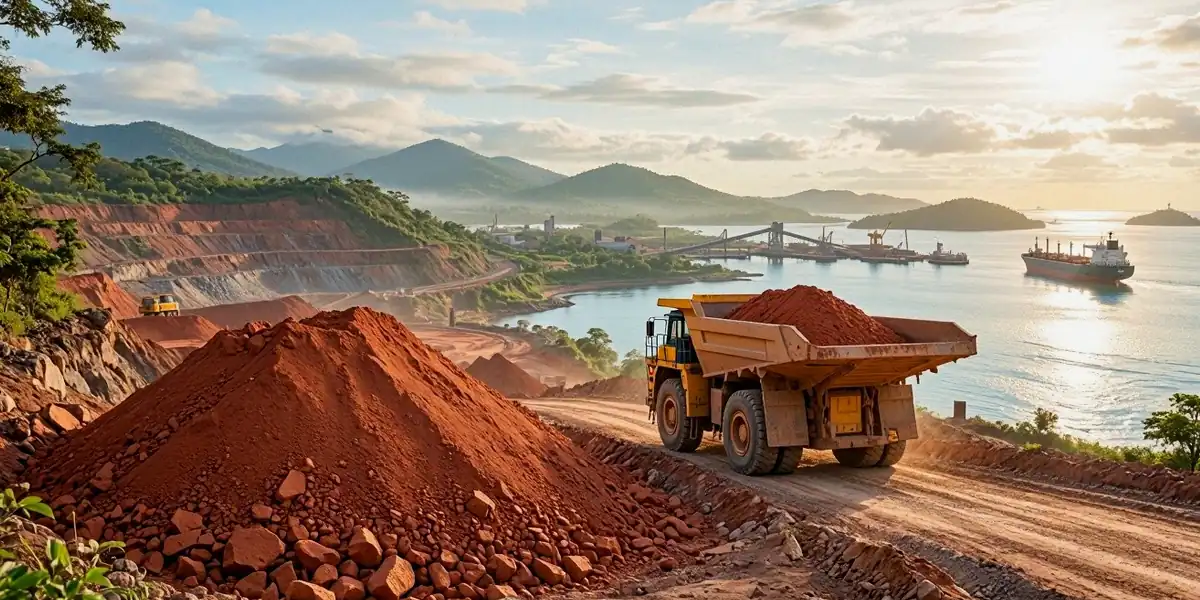
Bauxite is the raw ore from which aluminium is refined, and Guinea’s geology is unusually generous. The country accounts for roughly a quarter of global bauxite production, and its reserves are the largest on earth. When you drive the corridors between Conakry and the Boké region, you’re travelling through one of the most strategically important mining zones in the world.
The Scale of Guinea’s Reserves
Guinea’s bauxite endowment exceeds 7 billion tonnes, concentrated mainly in the Boké, Kindia, and Boffa regions. That scale matters because global demand for aluminium—used in everything from aircraft to electric vehicles to packaging—keeps rising. China is by far the largest buyer of Guinean bauxite, and Chinese refineries have become deeply dependent on Guinean supply. When Guinean exports slow, aluminium prices in Asia feel it.
From Ore to Aluminium: The Global Supply Chain
The journey from Guinean soil to a finished aluminium product involves several stages:
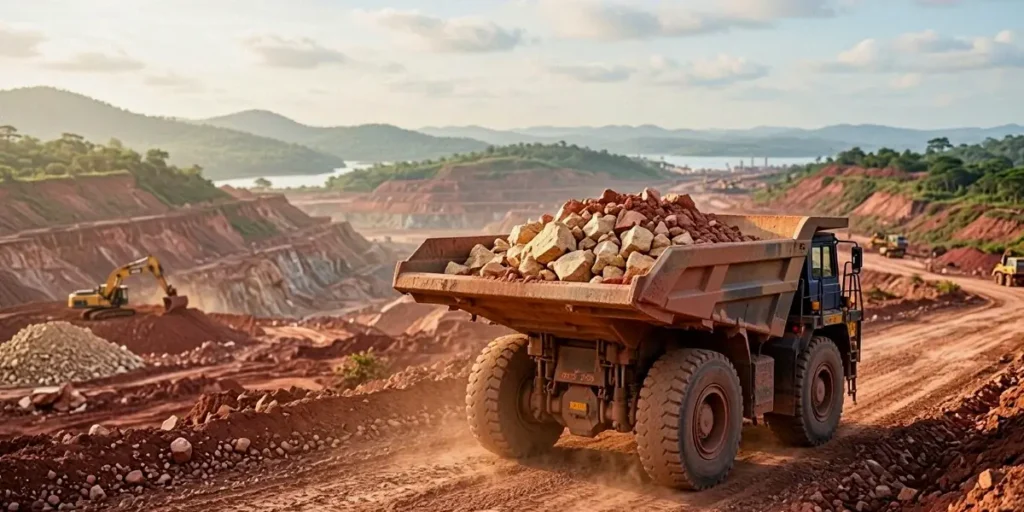
- Extraction: Bauxite is mined from open pits, mostly in western Guinea.
- Transport: Ore is trucked or moved by rail and conveyor to ports such as Kamsar and Conakry.
- Refining: Bauxite is processed into alumina, usually abroad—China, the UAE, and Europe are major refining hubs.
- Smelting: Alumina is smelted into aluminium using large amounts of electricity.
- Manufacturing: The metal becomes cars, cans, cables, and construction materials.
The critical point for Guinea is that most of the value is added after the ore leaves the country. That’s why debates about local processing—building refineries inside Guinea—are so central to the country’s economic future.
The Major Players: Who Controls Guinea’s Mines
Guinea’s mining sector is a mix of state interests, multinational giants, and a growing number of Chinese-linked consortiums. Understanding who’s who helps explain how revenue flows—and where it leaks.
Bauxite Giants: SMB, CBG, and GAC
Société Minière de Boké (SMB) has become one of the most prominent bauxite producers in Guinea, a consortium that includes Guinean, Chinese, and international partners, and it has reshaped export volumes over the past decade. Compagnie des Bauxites de Guinée (CBG), a long-established joint venture with significant international shareholding, remains a cornerstone of the sector. Emirates Global Aluminium’s Guinea Alumina Corporation (GAC) is another major exporter, operating in the Boké region with substantial investment in port and rail infrastructure.
Beyond bauxite, Rio Tinto’s Simandou iron ore project in southeastern Guinea is one of the largest untapped high-grade iron ore deposits in the world—and one of the most closely watched mining developments globally.
Canadian Mining Presence: Gold and Beyond
Canadian companies like Barrick Gold and IAMGOLD operate gold mines in Guinea, giving Canada a direct stake in the country’s extractive economy. These operations are smaller in volume than bauxite but significant in revenue and employment. Canadian firms bring technical expertise, safety standards, and access to capital markets—factors that shape how Guinea’s mining sector is perceived by international investors.
How Mining Shapes Guinea–Canada Relations
The Guinea–Canada relationship runs through the mining sector in ways that are often underappreciated. Canada is a significant source of mining finance and expertise for Guinea, and Toronto’s capital markets have historically been a key venue for raising funds for African mining projects.
Canadian Investment and Expertise
Canadian mining companies, engineering firms, and consultants work across Guinea’s gold and bauxite sectors. Canadian universities and technical schools also train geologists and mining engineers, some of whom return to Guinea or work for Guinean operations. This exchange creates professional networks that link Conakry, Montreal, Toronto, and Vancouver.
Diaspora Ties to the Mining Sector
Many Guineans in Canada work in mining-adjacent fields—finance, logistics, engineering, environmental consulting—or follow the sector closely because family members are employed by mining companies back home. Diaspora conversations about Guinea often circle back to mining: who got a job, which community received compensation, whether a new road was actually built. These ties make mining a diaspora issue, not just a domestic one.
The Economic Impact: Growth vs. Inequality
Mining is the engine of Guinea’s formal economy. It generates the majority of export earnings and a large share of government revenue. But growth figures don’t tell the whole story.
GDP Contributions and Government Revenue
Bauxite and gold exports underpin Guinea’s budget, and the Simandou iron ore project could double Guinea’s GDP by the late 2020s if it reaches projected production levels. That would be transformative—if the revenue is managed transparently and invested in infrastructure, health, and education.
Social and Environmental Costs
We can’t ignore the costs. Mining regions report:
- Displacement of farming communities from land they’ve used for generations.
- Dust and water pollution affecting agriculture and health.
- Pressure on local infrastructure from heavy truck traffic.
- Corruption concerns around licensing and revenue distribution.
These issues don’t mean mining should stop—they mean governance matters enormously. Without strong institutions and transparency, mineral wealth can coexist with persistent poverty.
Challenges and the Road Ahead
Guinea faces real obstacles in turning mineral wealth into broad-based development. Energy is one: refining alumina requires massive electricity, and Guinea’s power grid is limited. Transport is another: moving ore from inland deposits to ports requires rail and road capacity that doesn’t yet exist at the needed scale.
Infrastructure and Energy Constraints
The Simandou project includes plans for a trans-Guinean railway and port infrastructure, which could benefit other sectors too. But building these systems takes years and enormous capital. Chinese investment has become central to financing and construction, raising questions about long-term terms and control.
Local Processing and Value Addition
The Guinean government has pushed for local alumina refining so the country captures more value before export. Building a refinery is expensive and energy-intensive, but it’s a logical goal: exporting refined alumina instead of raw ore could multiply revenue. Whether the financing, power, and technical partnerships come together remains an open question.
What This Means for the Guinean Diaspora in Canada
For Guineans in Canada, mining isn’t abstract. It affects family incomes, community conditions, and investment decisions.
Remittances and Family Support
Many Guineans in Canada send money home regularly, and those remittances often support relatives in mining regions or in Conakry. When mining employment fluctuates or a project stalls, the effects ripple into household budgets—and into the remittances that diaspora members send.
Diaspora Investment Opportunities
Some diaspora members invest in mining-related ventures: equipment supply, transport, catering for mining camps, or real estate in growing towns. Others participate through diaspora investment funds or by supporting Guinean entrepreneurs. These channels can channel capital back home, but they require careful due diligence and awareness of regulatory risks.
FAQ
Does Guinea really have the world’s largest bauxite reserves?
Yes. Guinea holds the world’s largest bauxite reserves, over 7 billion tonnes, and is the top global exporter of bauxite. Its reserves are central to global aluminium supply.
Which Canadian companies operate in Guinea’s mining sector?
Canadian companies like Barrick Gold and IAMGOLD operate gold mines in Guinea. Canada is also a significant source of mining finance and expertise for the country.
What is Société Minière de Boké (SMB)?
Société Minière de Boké (SMB) is a major bauxite producer in Guinea. It’s a consortium that has become one of the country’s leading bauxite exporters.
How could the Simandou project affect Guinea’s economy?
The Simandou iron ore project could double Guinea’s GDP by the late 2020s if it reaches projected production. It also includes major rail and port infrastructure that could benefit other sectors.
How can the Guinean diaspora in Canada get involved?
Diaspora members can support transparency initiatives, invest in mining-related ventures with proper due diligence, and stay informed about how mining revenue is managed. Remittances remain a direct way to support families.
Mining is the backbone of Guinea’s economy, and it will remain so for decades. But backbone alone doesn’t guarantee health. Sustainable, equitable management of bauxite, gold, and iron ore—paired with transparency and local value addition—is what will determine whether Guinea’s mineral wealth finally reaches ordinary Guineans. For the Guinean diaspora in Canada, staying engaged, informed, and vocal about transparency is one of the most meaningful ways to contribute to that future.